
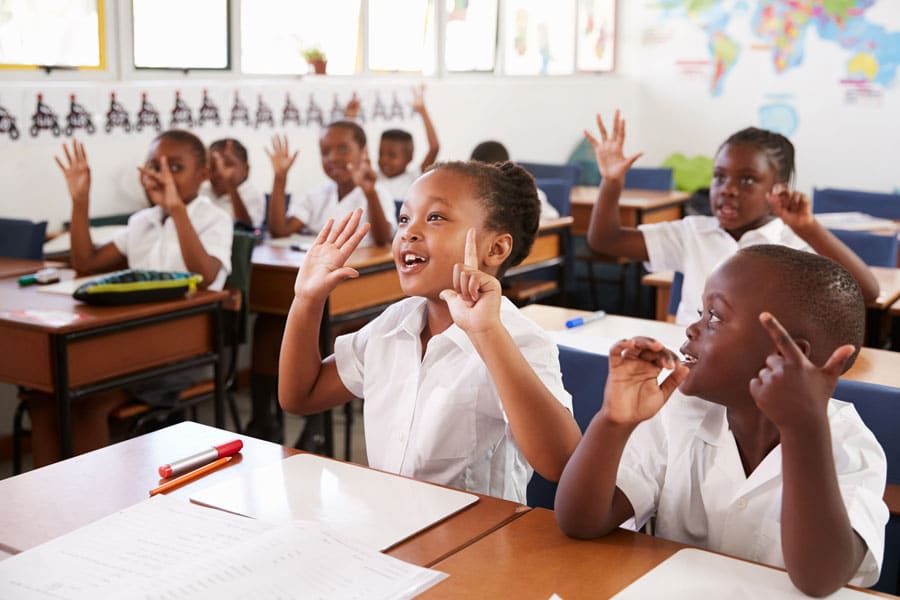

In South Africa, children can start Grade 1 when they are between 5½ and 7 years old, an unusual 18-month school-entry age range. This policy brief examines patterns of school entry ages across South Africa, drawing on administrative data from the Data Driven Districts (DDD) project across six provinces (EC, GP, KZN, LP, MP and NW), which consolidates information captured in SA-SAMS. It explores whether learners enter school at the ages permitted by legislation, how schools apply the two dominant school-entry age practices (Mid-year and Calendar-year entry), and how these practices relate to repetition and learning outcomes in the Foundation Phase (Grades 1–3).
International evidence consistently shows that a child’s relative age within a school cohort affects their outcomes. Within a grade, older learners tend to perform better academically and are less likely to repeat. This phenomenon is known as the relative age effect. This brief finds similar patterns in South Africa. Learners who start school at a younger age have higher repetition rates and lower marks in the Foundation Phase. These effects also vary by gender and socioeconomic status, with stronger relative age effects observed among boys and learners in poorer schools. The brief further examines how these effects evolve from Grade 1 to Grade 4, as initial age-related advantages may diminish as learners progress through the system.
A modest policy response is recommended. The current school-entry age policy is already flexible, and schools generally comply. However, the number of underage learners entering Grade 1 can still be reduced. With the recent move to make Grade R compulsory, parents, especially those with children born in the first half of the year, should receive clearer guidance on the options regarding school entry age.
DOWNLOAD PDF